 AI Agents Hub
Midjourney vs Flux vs Lovart: Which AI Image Tool Should You Use in 2026?
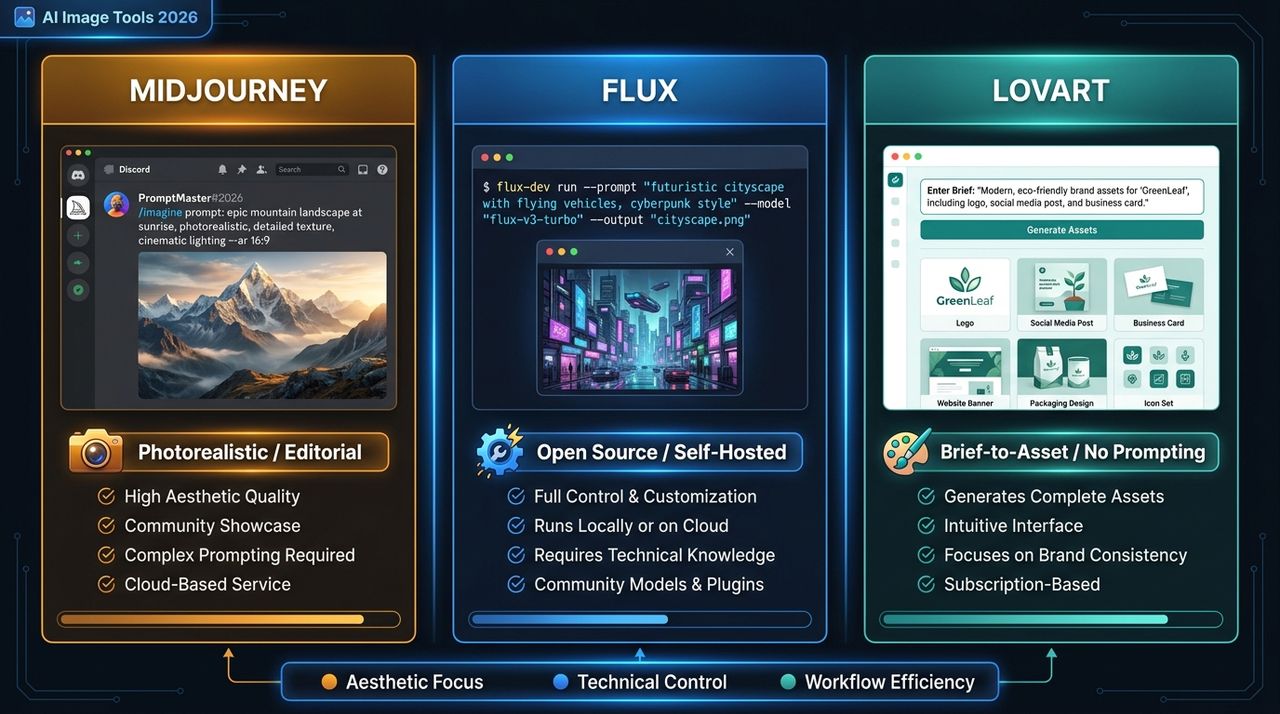
Midjourney owns editorial photorealism. Flux is the open-source challenger. Lovart converts a brief into finished brand assets. Three tools, three very different shapes.
Three AI image tools have taken different paths through the 2026 creative landscape. Midjourney is the photorealistic powerhouse that became the default for editorial and commercial imagery. Flux is the open-source challenger that turned the community into a development partner. Lovart is the design-agent that converts a brief into a finished brand asset — no prompt engineering required. Same goal (great images), three very different answers.
Midjourney: the editorial standard
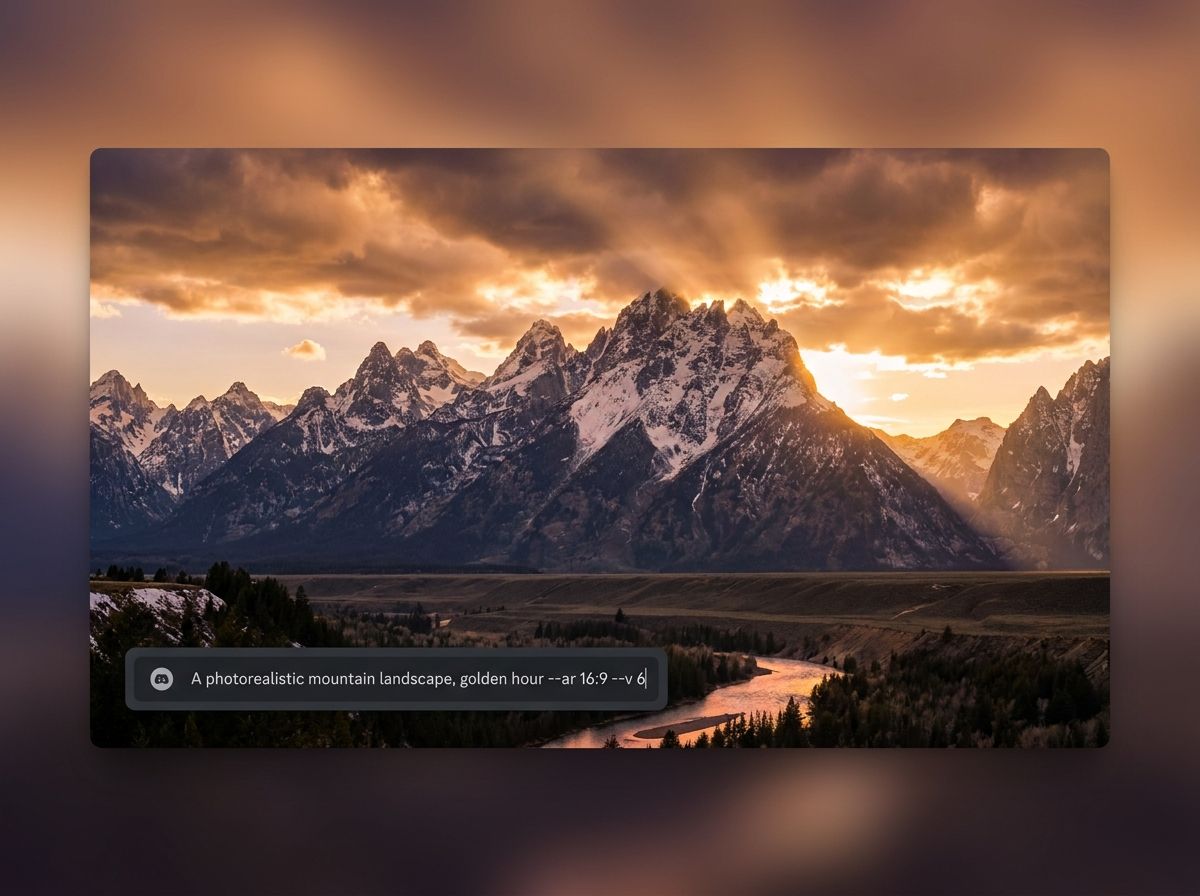
Midjourney has been the default answer to "I need a photorealistic image that looks like it came from a magazine" since 2023. In 2026, it is still that — but the quality gap over open-source alternatives has narrowed significantly. The strength of Midjourney is not just the model; it is the community. Thousands of prompts, style references, and parameter combinations are tested and shared daily on Discord, which means the collective intelligence of the user base is always ahead of any single documentation page.
The interface is Discord-first: you describe what you want in a channel, Midjourney generates four variants, you upscale or vary, you download. The learning curve is real — the --stylize, --chaos, --ar, and --cref (character reference) parameters are powerful but not intuitive. Once you know them, Midjourney is the fastest path from a text description to a finished editorial image.
The pricing is straightforward: Standard ($30/month) gives 15 hours of fast generation; Pro ($60/month) gives 30 hours and access to the raw model. For occasional use the Basic plan ($10/month) is enough to evaluate. The commercial license covers most use cases — read the terms carefully if you are building a product around generated imagery.
Flux: the open-source challenger
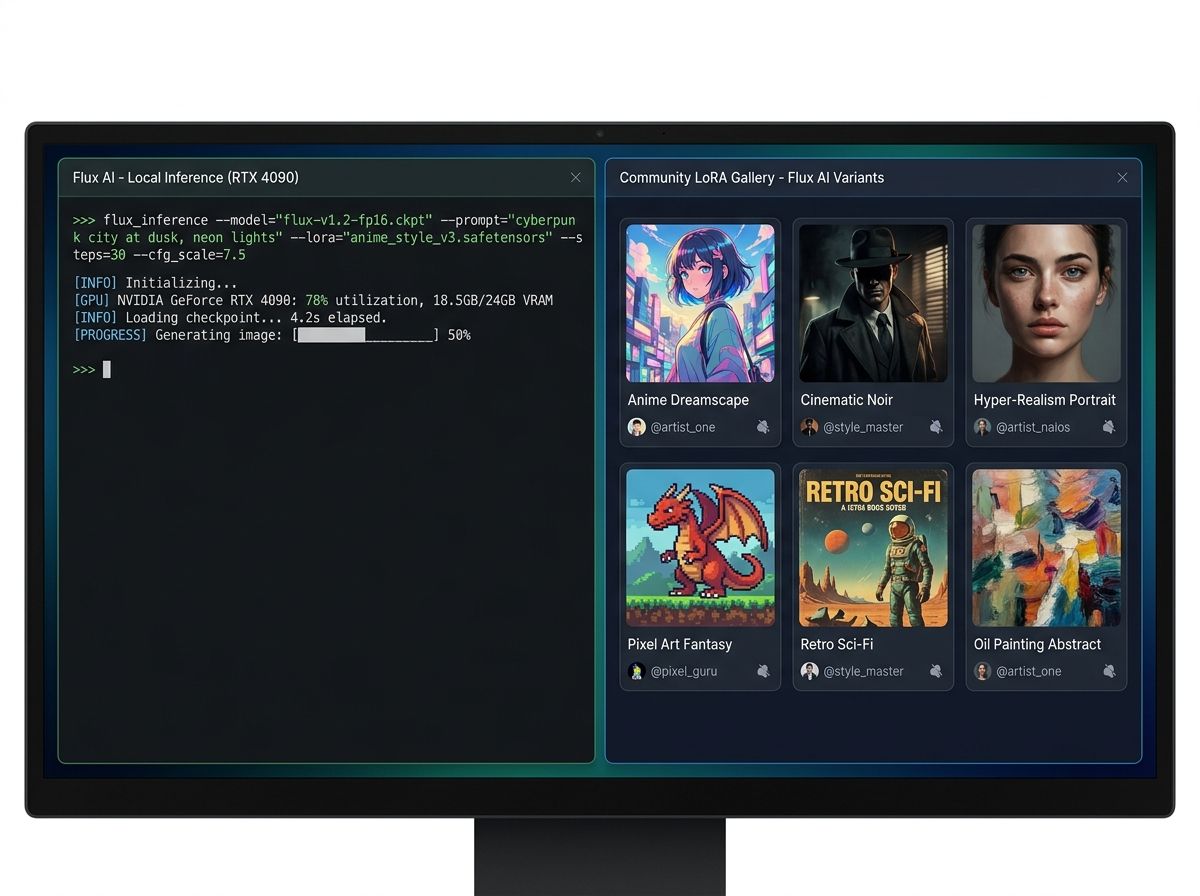
Flux is the tool that changed the dynamics of AI image generation. Released by Black Forest Labs (the team behind Stable Diffusion), Flux is genuinely open-source — the weights are available, the architecture is documented, and the community has been iterating on fine-tunes, LoRAs, and inference optimizations at a pace that closed the quality gap with Midjourney in 12 months.
The practical advantage of Flux is self-hosting. If you have the GPU capacity (an A100 or equivalent), you can run Flux locally with no per-image cost, no rate limits, and no data leaving your machine. For teams building products that need image generation as a component — rather than as a primary output — this changes the economics entirely.
The quality on the standard distribution is slightly behind Midjourney on photorealism at the high end, but the gap is task-dependent. For illustration, concept art, and stylized imagery, Flux matches or exceeds. The community fine-tunes (Flux Realism, Flux Anime, Flux Cinematic) cover the specific styles that Midjourney users migrated to Discord to discover.
Pick Flux if you want open-source, self-hosted, or you are building a product where image generation is a component. Skip it if you need the absolute best photorealism for editorial use and are not GPU-equipped.
Lovart: the design agent
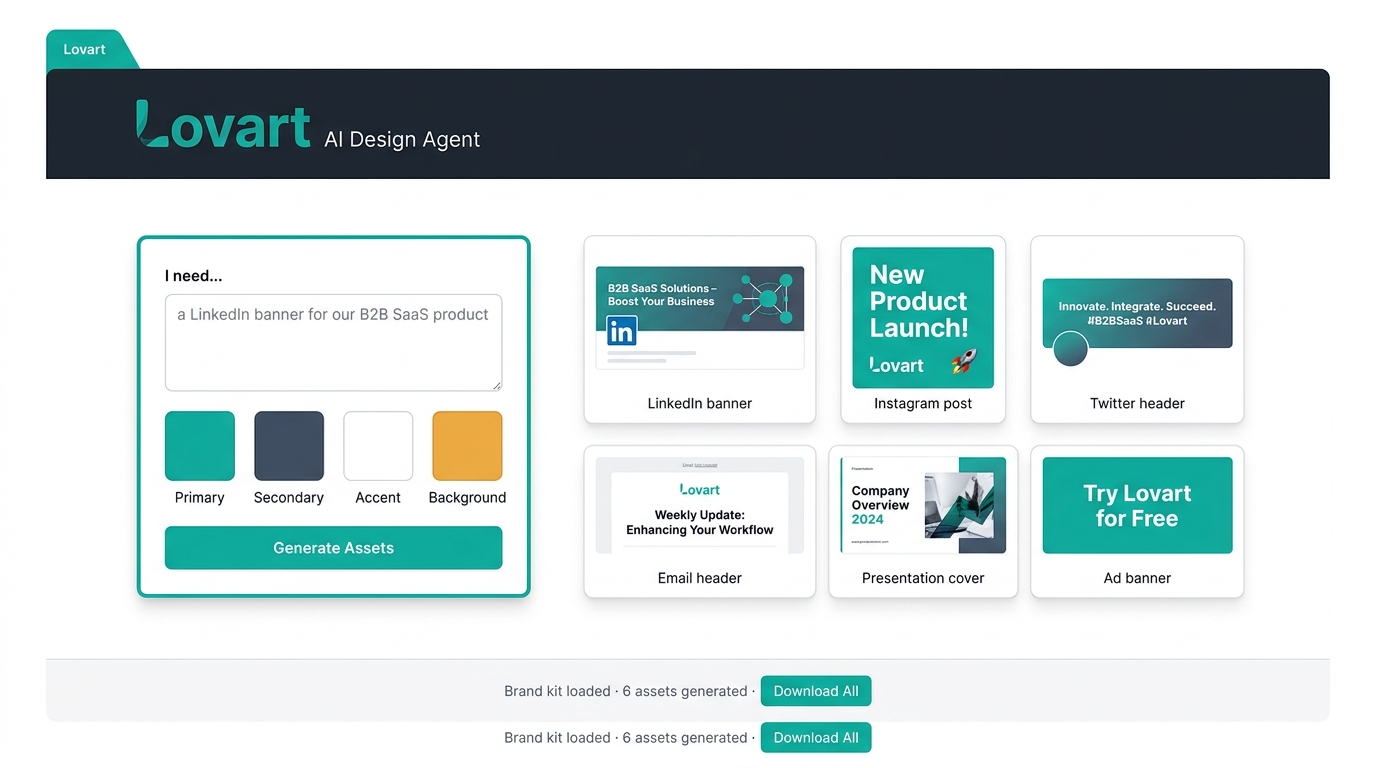
Lovart takes a different approach from both. Instead of asking you to craft a prompt, it asks you what you need — "a LinkedIn banner for our SaaS product," "a set of Instagram ads for our summer sale" — and generates finished, on-brand assets. The agent handles the creative decisions that most users find intimidating: composition, color harmony, typography, brand alignment.
The difference between Lovart and the other two is the interface: Lovart is a brief-to-asset pipeline, not a model you prompt. You describe the outcome; Lovart generates the assets. For marketers, founders, and anyone who needs a finished image without learning prompt engineering, this is the right tradeoff. For artists and illustrators who want to control every parameter, Lovart abstracts too much.
Lovart integrates with Figma, Canva, and major ad platforms — which means the output goes directly into the workflow rather than requiring a manual export. This is where it differentiates from Midjourney and Flux: it is a marketing tool first and an image model second.
Comparison at a glance
| Midjourney | Flux | Lovart | |
|---|---|---|---|
| Interface | Discord + web | Open-source (local/API) | Design agent (web) |
| License | Proprietary, subscription | Open-source (Apache 2.0) | Proprietary, subscription |
| Best for | Editorial photorealism | Self-hosted, product integration | On-brand marketing assets |
| Key strength | Community knowledge base | Zero per-image cost (self-host) | No prompt engineering needed |
| Learning curve | Medium (parameter system) | Medium (infrastructure) | Low (brief-to-asset) |
| Commercial use | Yes (paid plans) | Yes (Apache 2.0) | Yes (paid plans) |
| Output format | PNG/JPG | PNG/JPG (any) | PNG/JPG + Figma/Canva |
Verdict by use case
If you need the best possible photorealistic image for editorial, advertising, or a magazine cover: Midjourney. The community's collective iteration has solved most of the hard prompting problems, and the output quality for this use case is still the industry standard. Budget $30-60/month and spend time learning the parameter system.
If you are building a product that needs image generation as a feature: Flux. Self-hosting changes the economics, the open weights mean you control the inference stack, and the community fine-tunes cover most specific styles. The tradeoff is infrastructure — you need GPU capacity and the model management overhead.
If you are a marketer, founder, or content creator who needs finished assets without learning to prompt: Lovart. The brief-to-asset interface is the fastest path from "I need a LinkedIn banner" to a finished image. The brand alignment features make it the right tool for teams with consistent visual identity requirements.
For creative studios: the three tools are not mutually exclusive. Flux for experimental and exploratory work, Midjourney for the final polish on the best concepts, and Lovart for the production work that needs to be on-brand and fast.
What to try first
If you've never used an AI image tool, start with Lovart — the lowest friction, most immediately useful. Enter a brief, get a finished asset. Once you've felt what "good output without prompting" looks like, move to Midjourney if you want to push the quality ceiling, or Flux if you want to own the infrastructure. The three answer different questions; the sequence above gets you to "useful output" fastest.
Bottom line
Midjourney, Flux, and Lovart have found three distinct niches in 2026. Midjourney is the editorial standard — best for photorealism and community-shared knowledge. Flux is the open-source challenger — best for self-hosting and product integration. Lovart is the design agent — best for on-brand marketing assets without a prompt engineering tax. Pick the one that matches who you are and what you are trying to produce. They do not replace each other; they cover different creative jobs.
See the full profiles — and 59 other AI agents — in our directory.